Quick Answer
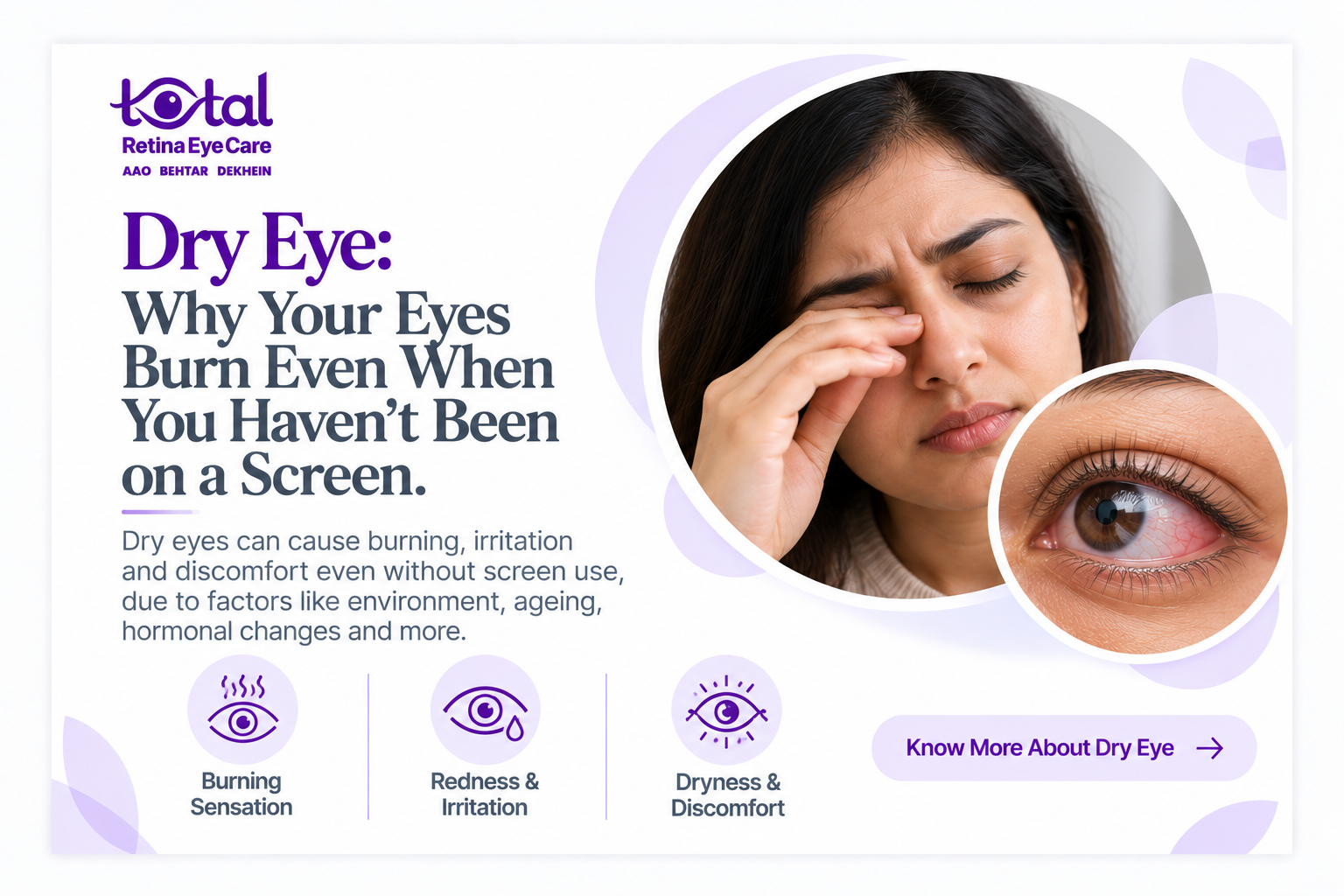
If your eyes burn or feel gritty even on days with little screen time, the problem is usually the quality or quantity of your tears, not just how much you use your eyes. Common reasons include blocked oil glands in the eyelids, ageing, certain medicines, dry or air-conditioned surroundings, and some autoimmune or hormonal conditions. Lubricating drops help many people, but if symptoms keep returning, you need a proper check-up rather than more drops.
"I know it's not my phone, doctor. I've hardly used it today." I hear this often in my clinic, usually said a little apologetically. The confusion is understandable. Screen time gets blamed so much that most people believe it is the only cause of dry eye. It is not. Screens are one trigger among many, and for plenty of patients they are not even the main one.
If you are searching for an eye specialist in Nagpur because of persistent burning, this guide will help you understand what may be going on and when to get examined.
A healthy tear film has three layers that work together:
Burning and grittiness usually mean one of these layers is not working well, most often the oily one. This oil comes from tiny glands along the edge of your eyelids, called meibomian glands. When they get blocked or make poor-quality oil, a condition known as meibomian gland dysfunction (MGD), your tears dry up too fast. This happens no matter how much you blink or how little you have looked at a screen.
Burning is the classic complaint, but dry eye feels different for different people. Some feel grittiness, as if there is sand in the eye. Others have watery eyes, which sounds odd but happens when the eye floods itself with thin tears to make up for a poor-quality tear film. Redness, sensitivity to light and discomfort that builds through the day are also typical. Symptoms are often worse in air-conditioned rooms or wind, and better first thing in the morning after your eyes have rested all night.
Over-the-counter lubricating drops really do help many people, especially when the dryness is mild or caused by the environment. But when the root problem is MGD, drops treat the symptom, not the source. They add moisture without repairing the oil layer that keeps it in place. That is why many patients tell me they have used drops for months with only partial relief. The drops are not wrong. They just solve one half of a two-part problem.
A good evaluation goes beyond asking about symptoms. It usually includes:
This shows whether your dry eye is mainly evaporative (oil-related), a true tear production problem, or a mix of both. That difference decides which treatment will actually work. It is also why many people look for the best eye clinic in Nagpur, one with the right tests and an experienced doctor, rather than guessing with different drops.
Do not keep self-treating if your eyes burn month after month. Persistent dry eye is easier to control when the cause is found early, and untreated cases can affect comfort, work and even vision. If you are looking for the best eye hospital in Nagpur for a detailed dry eye check-up, choose a centre that examines your eyelid glands and tear film, not just your symptoms.
Book an appointment with Dr. Sneha Agrawal 📍 Mehadia Bhawan, Lokmat Square, Dhantoli, Nagpur, Maharashtra 440012 📞 074209 55541 🌐 www.totalretinaeyecare.in
