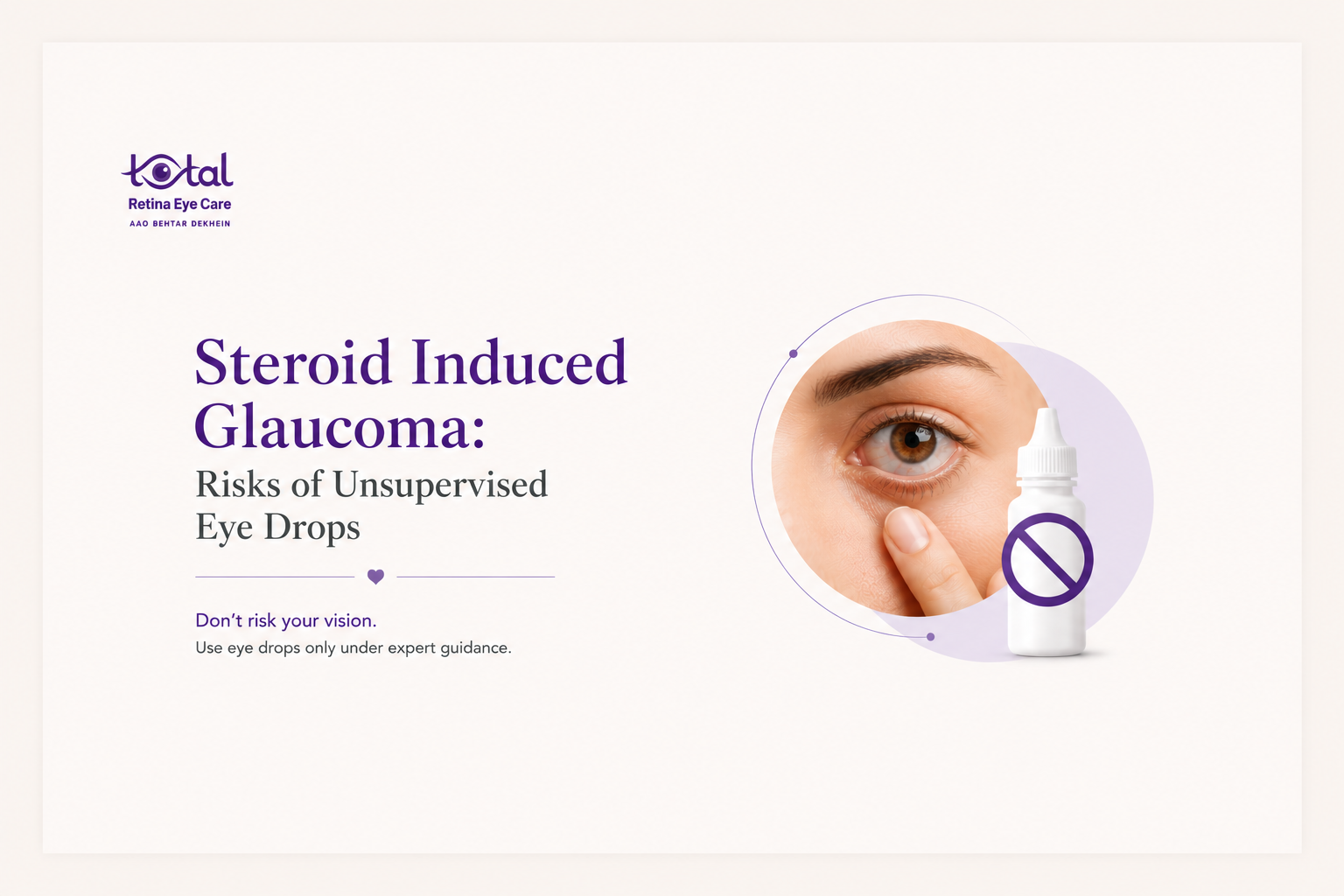
Steroid-Induced Glaucoma The Hidden Risk of Unsupervised Eye Drops
Steroid eye drops are effective, fast-acting, and easily available which is exactly what makes them dangerous when used without medical supervision. Many patients continue using a steroid drop that was originally prescribed for a short-term issue like allergy, redness, or post-surgery inflammation, simply because it "worked well" and made their eyes feel better. What most don't realize is that prolonged, unsupervised use can quietly lead to steroid-induced glaucoma a condition that can cause permanent vision loss.
Steroid eye drops work by reducing inflammation, which is why they're commonly prescribed after eye surgery or for conditions like uveitis, severe allergic conjunctivitis, or corneal inflammation. In the short term, under medical guidance, they're safe and effective.
The problem begins with prolonged use. In a subset of patients often referred to as "steroid responders" steroids interfere with the eye's natural drainage system, causing fluid to build up inside the eye. This raises intraocular pressure (IOP), and if left unchecked, sustained high pressure damages the optic nerve, leading to glaucoma.
Unsupervised eye drop use is particularly risky because steroid-induced glaucoma develops silently. There is:
This is what makes it so different from an infection or allergy the eye can look and feel completely normal while the optic nerve is being damaged in the background. This is exactly why a glaucoma specialist recommends periodic pressure checks for anyone on long-term steroid drops, rather than waiting for symptoms that may never come.
Certain patterns make steroid-induced glaucoma more likely:
1. Refilling the Same Prescription Repeatedly A drop prescribed for a two-week course but continued for months without a follow-up visit is one of the most common causes we see in clinic.
2. Self-Medicating Based on Past Prescriptions Using a leftover steroid drop from a previous eye issue allergy, redness, or irritation without consulting a doctor for the new symptom.
3. Long-Term Use After Eye Surgery Some patients continue post-surgical steroid drops longer than prescribed, assuming "more is safer," without realizing that duration needs to be doctor-monitored.
4. Family History of Glaucoma Steroid responders are more common among people who already have a genetic predisposition to glaucoma, making supervision even more important for this group.
5. Children and Young Adults on Steroids Pressure rise can occur faster and be harder to detect early in younger patients, since routine eye pressure checks are less common in this age group.
The reassuring part of this condition is that steroid-induced glaucoma is preventable with simple precautions:
If pressure rise is caught early, stopping or adjusting the steroid along with appropriate treatment is usually enough to prevent lasting damage. The danger comes specifically from delay, not from steroids themselves.
If you've been using a steroid eye drop for several weeks or months — whether prescribed originally or self-continued — the right next step is a comprehensive eye check that includes:
This is a quick, painless assessment, but it's the only way to know whether any pressure-related damage has occurred. If elevated pressure or optic nerve changes are found, timely glaucoma treatment in Nagpur can prevent further progression and protect your remaining vision.
If you've been on steroid drops long-term, self-monitoring at home isn't enough glaucoma damage can only be detected through proper clinical testing. A glaucoma specialist can measure your eye pressure accurately, assess optic nerve health, and determine whether the steroid needs to be stopped, tapered, or replaced with a safer alternative. Early referral makes the difference between a condition that's fully manageable and one that causes irreversible vision loss.
Steroid eye drops are valuable tools when used correctly but they are not "gentle" or risk-free simply because they're available without much resistance from a pharmacy. Unsupervised eye drop use, even with good intentions, can lead to a condition with no early symptoms and permanent consequences.
If you or a family member has been using a steroid eye drop beyond the prescribed period, don't wait for symptoms to appear they may not, until damage has already begun.
Book an eye pressure check today if you've been using steroid eye drops long-term it takes minutes and can protect your vision for years. Our team offers comprehensive glaucoma treatment in Nagpur, from early detection to long-term management.