
Introduction
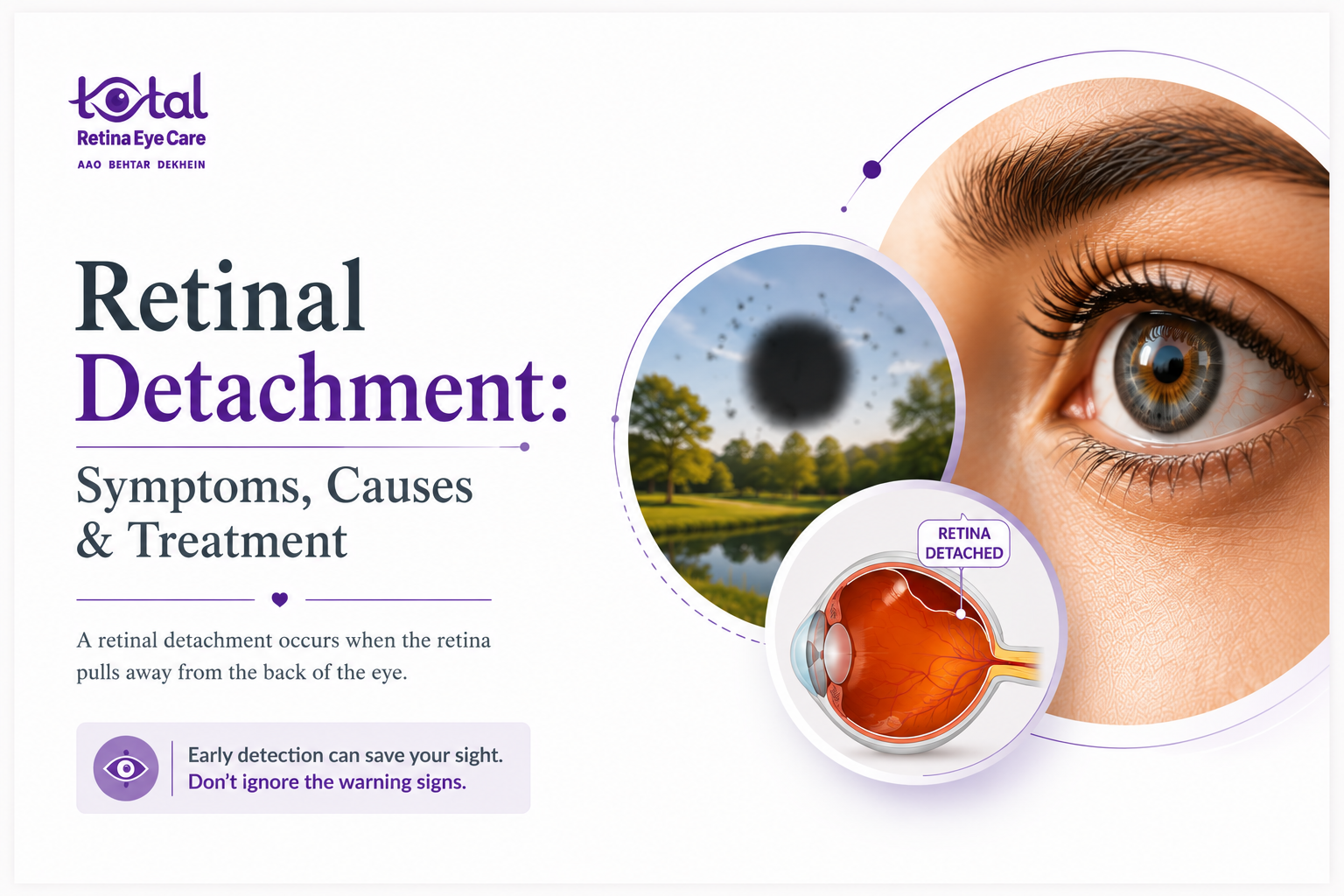
Retinal detachment is a medical emergency in which the retina the light-sensitive layer at the back of the eye pulls away from its normal position. It doesn't cause pain, but it can lead to permanent vision loss if it isn't treated quickly. If you're suddenly noticing floaters, flashes of light, or a shadow spreading across your vision, this calls for same-day attention at a qualified eye clinic in Nagpur, not a wait-and-watch approach.
Dr. Dhrubbojyoti Saaha has spent 15 years treating retinal conditions, and one pattern he sees again and again is how often patients delay not because they don't care about their vision, but because a painless symptom simply doesn't feel urgent. That gap between "what it feels like" and "what it actually is" is what this article is meant to close.
What Is Retinal Detachment?
The retina works like film in a camera it captures light and sends the image to your brain through the optic nerve. To function properly, it needs to stay attached to the back wall of the eye, where its blood supply comes from. Retinal detachment happens when the retina separates from this layer, cutting off its nourishment. Once detached, the affected part of the retina stops working properly, which is why vision in that area becomes blurred, dark, or disappears altogether.
What Are the Symptoms?
Retinal detachment often gives warning signs before or as it happens. Common symptoms include:
● A sudden increase in floaters (small specks, threads, or cobwebs drifting across your vision)
● Flashes of light, particularly at the edges of your vision
● A dark shadow or curtain spreading across part of your field of vision
● Blurred or distorted vision
● A general sense that your peripheral (side) vision is narrowing
These symptoms can appear gradually or very suddenly, and they're usually painless which is part of why patients delay seeking care.
What Causes Retinal Detachment?
Most cases follow a similar underlying process:
● The vitreous a clear, gel-like substance filling the eye naturally shrinks and becomes more liquid with age
● As it shrinks, it can pull on the retina
● This pulling can create a small tear in the retina
● Fluid then passes through the tear and collects behind the retina, pushing it away from the back of the eye
Less commonly, retinal detachment can also result from severe eye trauma, advanced diabetic eye disease, or as a complication following certain eye surgeries.
Who Is at Higher Risk?
Certain factors increase the likelihood of retinal detachment:
● High myopia (significant short-sightedness)
● A previous retinal detachment in either eye
● Family history of retinal detachment
● Previous cataract or other intraocular surgery
● Direct trauma or injury to the eye
● Advanced diabetic retinopathy
If you fall into one or more of these categories, it's worth staying especially alert to any sudden change in floaters, flashes, or vision, and keeping the contact details of a reliable retina specialist in Nagpur close at hand.
When Is It an Emergency?
Retinal detachment is always an emergency once symptoms appear this is not a condition to monitor at home. A sudden shower of new floaters, new or worsening flashes of light, or any shadow or curtain across your vision should be evaluated the same day. In 15 years of practice, Dr. Saaha has seen the outcome depend on timing more than almost any other factor patients who come in within a day or two of symptoms starting generally hold onto far more of their vision than those who wait a week "to see if it settles."
How Is Retinal Detachment Diagnosed?
Diagnosis is quick and doesn't require any invasive testing. A retina specialist will typically:
● Dilate your pupils using eye drops
● Examine the retina in detail using specialized lenses and lights, right up to its edges, where tears most commonly occur
● In some cases, use additional imaging such as ocular ultrasound if the view of the retina is limited (for example, due to bleeding)
This evaluation usually takes only a few minutes and gives a clear picture of whether a tear or detachment is present.
How Is It Treated?
Treatment depends on how much of the retina is affected and how the detachment presents. Options a retina surgeon in Nagpur may consider include:
● Laser photocoagulation used for retinal tears that haven't yet progressed to full detachment, sealing the tear to prevent fluid from spreading underneath
● Pneumatic retinopexy a gas bubble is injected into the eye to help reposition the retina, often combined with laser or freezing treatment
● Scleral buckle surgery a small silicone band is placed around the eye to relieve the pulling that's causing the detachment
● Vitrectomy — the vitreous gel is removed and replaced with a gas or oil bubble, allowing the retina to settle back into place
These procedures fall under vitreoretinal surgery in Nagpur, and the right approach depends on individual factors like the size, location, and cause of the detachment a decision made only after a detailed examination. Outcomes vary from patient to patient, and no specific result can be guaranteed in advance.
What Happens If Treatment Is Delayed?
Delay is the single biggest factor affecting outcome in retinal detachment. The retina depends on a constant blood supply, and the longer it remains detached, the more likely permanent damage becomes in that area, even after successful reattachment surgery. Patients treated within a day or two of symptoms starting generally have a better chance of recovering meaningful vision compared to those who wait days or weeks. In some cases, prolonged delay can result in vision that doesn't fully return even after the retina is surgically reattached.
When Should You See a Retina Specialist?
Any sudden floaters, flashes, or shadow in your vision should prompt an immediate visit to a retina specialist not a general check "whenever convenient." At Total Retina Eye Care, widely regarded as the best eye hospital in Nagpur for retinal care, Dr. Dhrubbojyoti Saaha brings 15 years of experience in vitreoretinal surgery, having treated a large number of retinal tear and detachment cases over that time. Patients often mention that he takes the time to walk them through exactly what's happening in their eye and what to expect next, in plain language rather than medical jargon something that matters especially in a situation as frightening as sudden vision loss. If you're experiencing any of the symptoms above, a same-day evaluation at a dependable eye clinic in Nagpur is the safest next step.
FAQ
1. Is retinal detachment painful?
No, it's usually painless. This is exactly why symptoms like floaters, flashes, or a shadow in your vision should never be ignored just because there's no pain involved.
2. Can retinal detachment heal on its own?
No. Once the retina has detached, it requires medical or surgical treatment to reposition it. It will not reattach on its own.
3. Is retinal detachment always caused by an injury?
No, most cases are unrelated to injury and occur due to natural age-related changes in the vitreous gel. Trauma is only one of several possible causes.
4. How quickly do I need to see a doctor if I notice symptoms?
Ideally the same day. Retinal detachment is considered an emergency, and outcomes are generally better with faster treatment at an experienced eye clinic in Nagpur.
5. Will I need surgery for a retinal detachment?
It depends on the extent of the detachment. Some early tears can be treated with laser alone, while more advanced detachments typically require vitreoretinal surgery such as a vitrectomy or scleral buckle.
6. Can both eyes be affected by retinal detachment?
It's possible, though detachment usually affects one eye at a time. If you've had a detachment in one eye, your risk in the other eye is somewhat higher, so regular monitoring by a retina specialist in Nagpur is recommended.
7. Will my vision return to normal after treatment?
This varies by patient and depends heavily on how much of the retina was affected and how quickly treatment was received. Dr. Saaha generally avoids giving a fixed number to patients before examining them, since he's seen outcomes range widely even between two patients with seemingly similar symptoms — your specialist can give you a clearer picture after examining your eye.
Book a Retina Consultation in Nagpur
If you're experiencing floaters, flashes, or a shadow in your vision, don't wait for your next routine visit retinal detachment is time-sensitive, and early evaluation at the best eye hospital in Nagpur gives you the best chance at preserving your vision.
📍 Mehadia Bhawan, Lokmat Square, Dhantoli, Nagpur, Maharashtra 440012
📞 074209 55541
🌐https://www.totalretinaeyecare.in/
