Do your eyes burn, feel gritty or get tired by evening? Do they water a lot and still feel dry? You may have tried many eye drops, only to get relief for a short while. If this sounds familiar, the real problem may lie in your eyelids and not in your tears.
In this guide, we explain MGD in plain language: what it is, why it happens and how it can be treated. If you are searching for an eye hospital in Nagpur for dry eye care, this guide will also help you know what to expect from a proper eye check-up.
Important: If your eyes stay dry, red or irritated for more than two weeks, or if eye drops give no lasting relief, please get your eyes examined. Early treatment can save your eyelid glands.
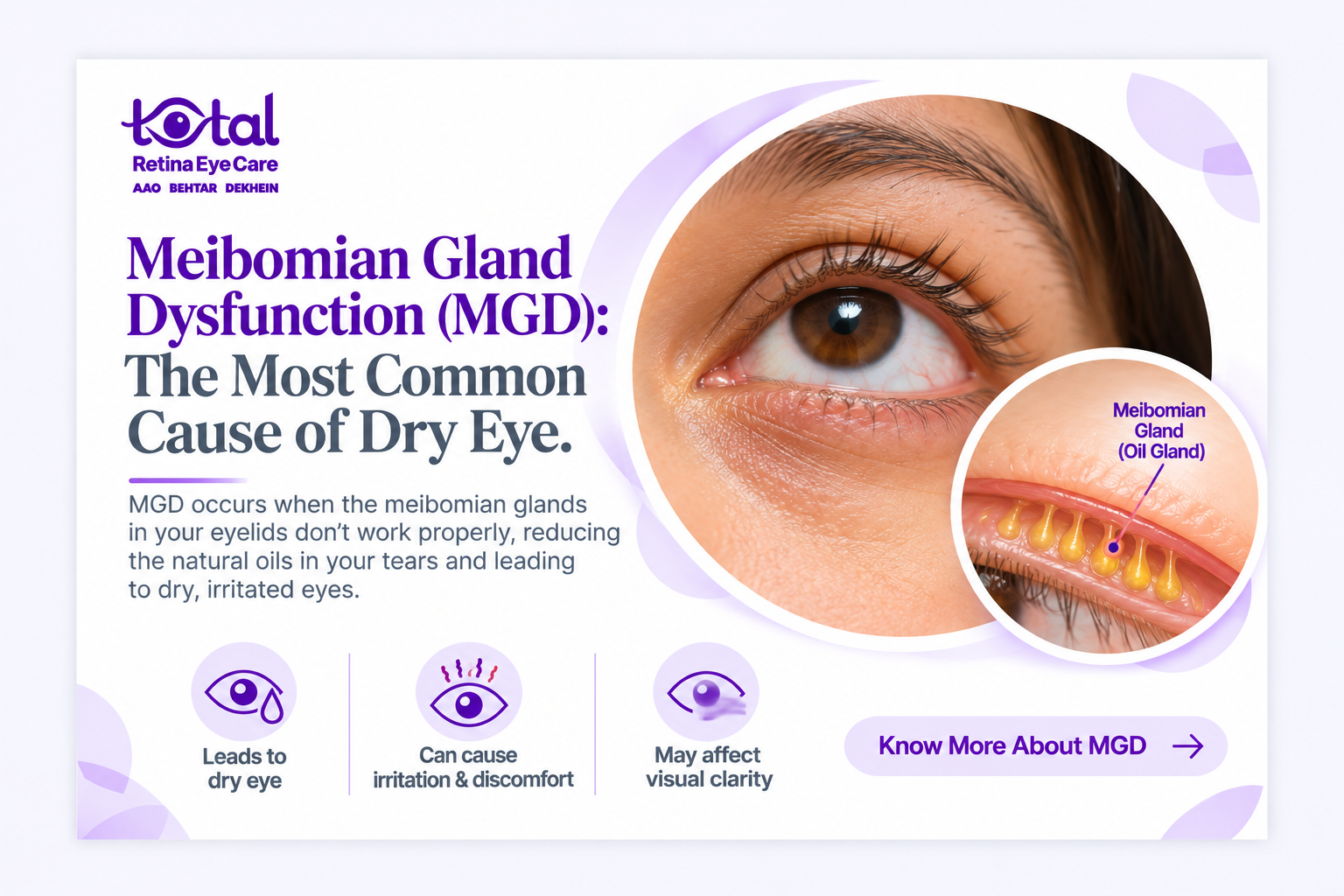
What Is Meibomian Gland Dysfunction?
Along the edge of each eyelid sits a row of tiny glands called meibomian glands. With every blink, they release a little oil onto the surface of your eye.
This oil forms a thin protective layer over your tears and stops them from evaporating too fast. When the glands are blocked, the oil cannot flow out. Tears then dry up quickly, leaving your eyes dry, sore and tired.
MGD does not go away on its own. Without treatment, the glands can slowly shrink and stop working permanently.
Why Does Your Eye Need This Oil?
Your tear film has three layers:
- Oil: prevents the tears from evaporating
- Water: keeps the eye moist and clean
- Mucus: helps the tears spread evenly over the eye
When the oil layer is missing, the whole tear film breaks down. This is why some people produce plenty of tears and still suffer from dry eyes.
Common Symptoms of MGD
MGD develops slowly, so many people ignore it in the beginning. Watch out for these signs:
- Burning or stinging in the eyes
- A sandy or gritty feeling
- Red, swollen or itchy eyelids
- Watery eyes
- Blurry vision that clears after blinking
- Tired eyes while reading or using a phone or computer
- Sticky or crusty eyelids in the morning
- Small, painful lumps on the eyelid (styes)
- Sensitivity to wind, air-conditioning or bright light
- Discomfort while wearing contact lenses
These symptoms can also be caused by allergy or infection, so an eye check-up is the only sure way to know what is going on.
What Causes MGD?
Most people have more than one cause. The common ones are:
- Age: the glands work less efficiently as we grow older, especially after 40.
- Long screen time: we blink less while looking at phones and computers, so the glands are not squeezed to release oil.
- Blepharitis (eyelid infection or swelling): dirt and germs along the lash line can block the glands.
- Demodex mites: these tiny mites live on eyelashes and irritate the eyelids.
- Contact lenses: years of wear can affect the glands.
- Hormonal changes: for example, after menopause.
- Skin conditions: such as rosacea, facial dandruff or eczema.
- Eye makeup: eyeliner on the inner lid edge, or makeup left on overnight, can clog the glands.
- Certain medicines: some acne tablets and allergy medicines can dry the eyes.
- Dry or polluted air: air-conditioning, dust, smoke and wind make tears evaporate faster.
Why You Should Not Ignore MGD
Once a gland is lost, it does not grow back. This is why early care matters so much. Untreated MGD can lead to:
- Constant dryness and discomfort
- Repeated styes and eyelid lumps
- Inflammation and damage to the surface of the eye
- Blurry vision that comes and goes
- Difficulty with contact lenses
MGD, Dry Eye and Cataract Surgery
This is something many patients do not know. If you are planning cataract surgery in Nagpur, or have been advised to get a cataract operation soon, it is important to check your eyelid glands and tear film first.
Dry eye caused by MGD can affect the accuracy of the measurements taken before cataract surgery, which are used to choose the right lens power. Untreated dryness can also make healing less comfortable after surgery. Treating MGD before the operation helps your surgeon plan better and supports clearer, more comfortable vision afterwards.
That is why a complete eye check-up before cataract surgery should include an examination of the eyelids and tear film, not just the lens.
How Is MGD Diagnosed?
Your eye doctor can check for MGD within a few minutes. The tests are quick and painless. The doctor may:
- Examine your eyelids and glands under a special microscope
- Gently press the eyelid to see whether oil flows out easily
- Check how fast your tears dry up on the eye
- Take an image of the glands to see if any are lost
- Use a safe dye to look for dryness on the eye surface
Treatment: What Can Be Done?
There is no one-time cure for MGD, but it can be controlled very well. Most people feel much better with regular care, and your doctor will decide what suits you best.
Warm Compress
Place a clean, warm cloth over your closed eyes for about 10 minutes. The heat softens the thick, hardened oil so it can flow out of the glands. Do this daily, not only when your eyes hurt.
Gentle Eyelid Massage and Cleaning
After the warm compress, gently massage the edges of your eyelids. Then clean the lash line with a lid wipe or lid cleanser recommended by your doctor. This removes dirt and excess oil.
Lubricating Eye Drops
Special eye drops add moisture and support the oil layer. Ask your doctor which drops are right for you. Drops can bring relief, but they do not open blocked glands.
Medicines
If the eyelids are swollen or infected, your doctor may prescribe eye drops, ointment or tablets to settle the inflammation. If Demodex mites are the cause, you will be given treatment for that as well.
In-Clinic Treatments
If home care is not enough, the eye specialist may suggest:
- A machine-based treatment that gently warms the eyelids and clears blocked glands
- Light therapy (IPL) to reduce eyelid inflammation
- Careful cleaning of the eyelid margin and gland openings by the doctor
Food and Lifestyle
Drink enough water, take regular screen breaks and avoid smoke. Some people benefit from omega-3 rich foods such as fish, flax seeds and walnuts. Please check with your doctor before starting any supplement.
Can the Glands Recover?
When MGD is found early, regular care can reopen the glands and give good relief. If many glands are already lost, they cannot return. Even then, treatment protects the glands you still have and keeps your eyes comfortable. MGD can come back if you stop eyelid care, so keep it up.
Simple Daily Habits to Protect Your Eyes
- Follow the 20-20-20 rule. Every 20 minutes, look at something 20 feet away for 20 seconds.
- Blink fully and often while using a phone, laptop or TV.
- Keep your screen slightly below eye level.
- Remove eye makeup every night and avoid eyeliner on the inner edge of the eyelid.
- Continue warm compress and eyelid cleaning regularly, even when you feel better.
- Protect your eyes from wind, dust and smoke. Wear sunglasses outdoors.
- Do not rub your eyes.
- Get an eye check-up once a year, or sooner if the problem continues.
When Should You See an Eye Doctor?
Please book an appointment if you have:
- Dry, burning or gritty eyes for more than two weeks
- Repeated styes or swollen eyelids
- Blurry vision that changes during the day
- Contact lenses that feel more uncomfortable with time
- No lasting relief from eye drops bought at a medical shop
- Cloudy or hazy vision, which may be an early sign of cataract
Visit an eye doctor immediately if you have severe eye pain, a sudden drop in vision, a very red eye or strong sensitivity to light. These need urgent care.
Frequently Asked Questions
1. Is MGD the same as dry eye?
Not exactly. Dry eye is the main problem, and MGD is its most common cause. Many people with MGD make enough tears, but the tears dry up too fast because there is not enough oil.
2. Can MGD be cured?
MGD is a long-term condition, so the aim is to control it rather than cure it once and for all. With early treatment and regular eyelid care, most people get good relief.
3. How long does treatment take to work?
Warm compress and eyelid cleaning usually need a few weeks of regular use before you notice a clear difference. Be patient and continue daily.
4. Can I just use normal eye drops?
Eye drops give short-term relief, but they do not open blocked glands. If symptoms keep returning, the glands need to be treated.
5. Can children get MGD?
It is uncommon, but it can happen in children with repeated styes, allergy or eyelid swelling. An eye check-up is advised.
6. Do contact lenses cause MGD?
Wearing contact lenses for many years can affect the glands and cause dryness. If your eyes feel uncomfortable with lenses, get them checked.
7. Is MGD the same as a stye?
No. A stye is a painful lump on the eyelid caused by infection. However, people with MGD get styes more often because their glands are blocked.
8. Should I treat dry eye before cataract surgery?
Yes, in most cases. Treating MGD and dry eye before cataract surgery helps your surgeon take accurate measurements and supports a smoother recovery. Your doctor will guide you on the right timing.
Final Thoughts
Meibomian gland dysfunction is very common, yet many people have never heard of it. The good news is that it can be treated, especially when found early. If your eyes are always dry, tired or irritated, do not keep switching eye drops. Get your eyelid glands checked.
At Total Retina Eye Care, our eye specialists examine your eyes, find the exact cause of your dry eye and guide you through treatment and long-term care. Whether you are looking for an eye hospital in Nagpur for dry eye, repeated styes or contact lens trouble, or you are planning cataract surgery in Nagpur, a complete eye check-up is the right first step.