
What is LASIK Surgery?
LASIK (Laser-Assisted In Situ Keratomileusis) is a corneal reshaping procedure. A thin flap is created on the surface of the cornea, and a precise excimer laser reshapes the underlying corneal tissue to correct how light focuses onto your retina. The flap is then repositioned, and it heals naturally without stitches.
LASIK is one of the most performed elective surgeries in the world and has been refined over more than three decades. It corrects myopia (nearsightedness), hyperopia (farsightedness), and astigmatism giving most patients 6/6 vision without glasses within 24 hours.
What is ICL Surgery?
ICL (Implantable Collamer Lens) is a different approach entirely. Instead of reshaping your cornea, a biocompatible lens is implanted permanently inside your eye positioned between your iris and natural lens. Think of it as a permanent, invisible contact lens placed inside the eye rather than on its surface.
ICL does not remove any corneal tissue, which makes it an excellent option for patients with thin corneas, very high power, or dry eyes conditions that may not be suitable for LASIK. The procedure is reversible, and the lens can be removed or replaced if ever required.
Who Should Choose LASIK?
LASIK is usually the right choice if you:
• Have mild to moderate myopia, hyperopia, or astigmatism
• Have a corneal thickness within the normal recommended range
• Want the fastest, most cost-effective glasses-free solution
• Do not have significant dry eye disease
• Have stable eye power for at least the last 12 months
Who Should Choose ICL?
ICL may be the better option if you:
• have very high myopia or hyperopia beyond LASIK's safe treatment range
• have thin corneas that are not suitable for corneal reshaping
• have chronic dry eyes that could worsen after LASIK
• want a reversible procedure with the option to remove the lens later
• prioritize the sharpest possible night vision quality
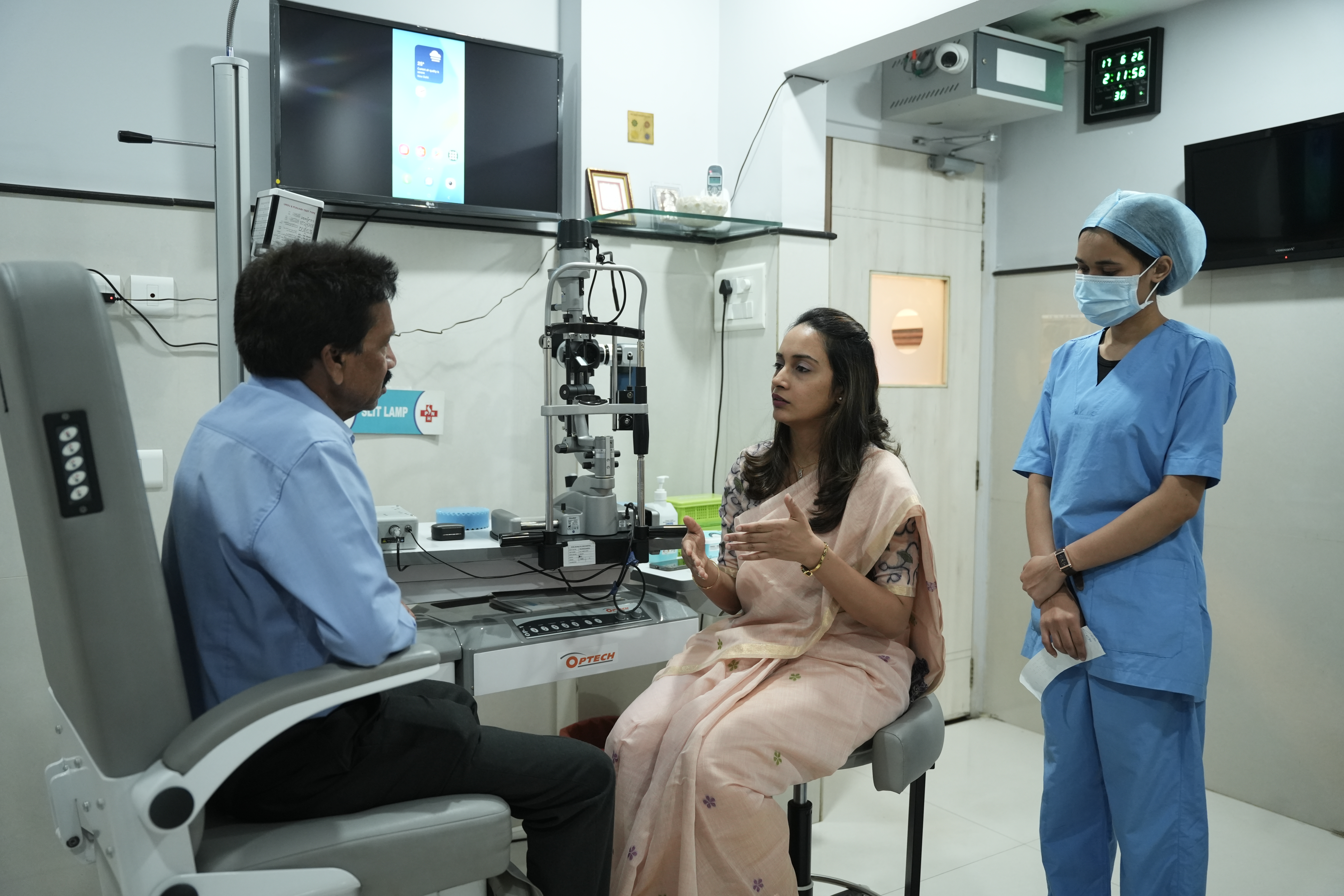
DR. AGRAWAL'S ADVICE There is no universally "better" surgery between the two only the right surgery for your specific eyes. A detailed pre-surgical evaluation including corneal topography, pachymetry (corneal thickness), and pupil size measurement is essential before recommending either procedure.
Your Pre-Surgery Evaluation, What to Expect
Before recommending LASIK or ICL, we conduct a comprehensive screening at our Nagpur clinic to determine which procedure is safe and suitable for your eyes:
• Corneal Topography
to map the shape and detect any irregularities
• Pachymetry
to measure corneal thickness and confirm LASIK eligibility
• Anterior Chamber Depth — Anterior chamber depth measurement
essential for safe ICL sizing and placement
• Pupil Size Measurement
to assess night vision risk factors
• Dry Eye Assessment
to rule out contraindications for either procedure
• Power Stability Check
confirming your prescription has not changed significantly in the last year
Recovery, What Both Procedures Look Like
LASIK Recovery
Most patients notice significantly improved vision within hours of the procedure, with full stabilization over 1–2 weeks. Mild dryness, light sensitivity, or glare may occur briefly and typically resolves with prescribed drops.
ICL Recovery
Vision improvement is often immediate and dramatic. A short follow-up period of 1–2 days is recommended to monitor eye pressure and lens positioning, after which patients typically resume normal activities.
Ready to Find Out Which Surgery Suits You?
The only way to truly know whether LASIK or ICL is right for you is through a detailed evaluation. At Total Retina Eye Care, Nagpur, we use advanced diagnostic technology to assess your eyes
thoroughly before recommending any procedure, because the right surgery is the one that's right for your eyes specifically.