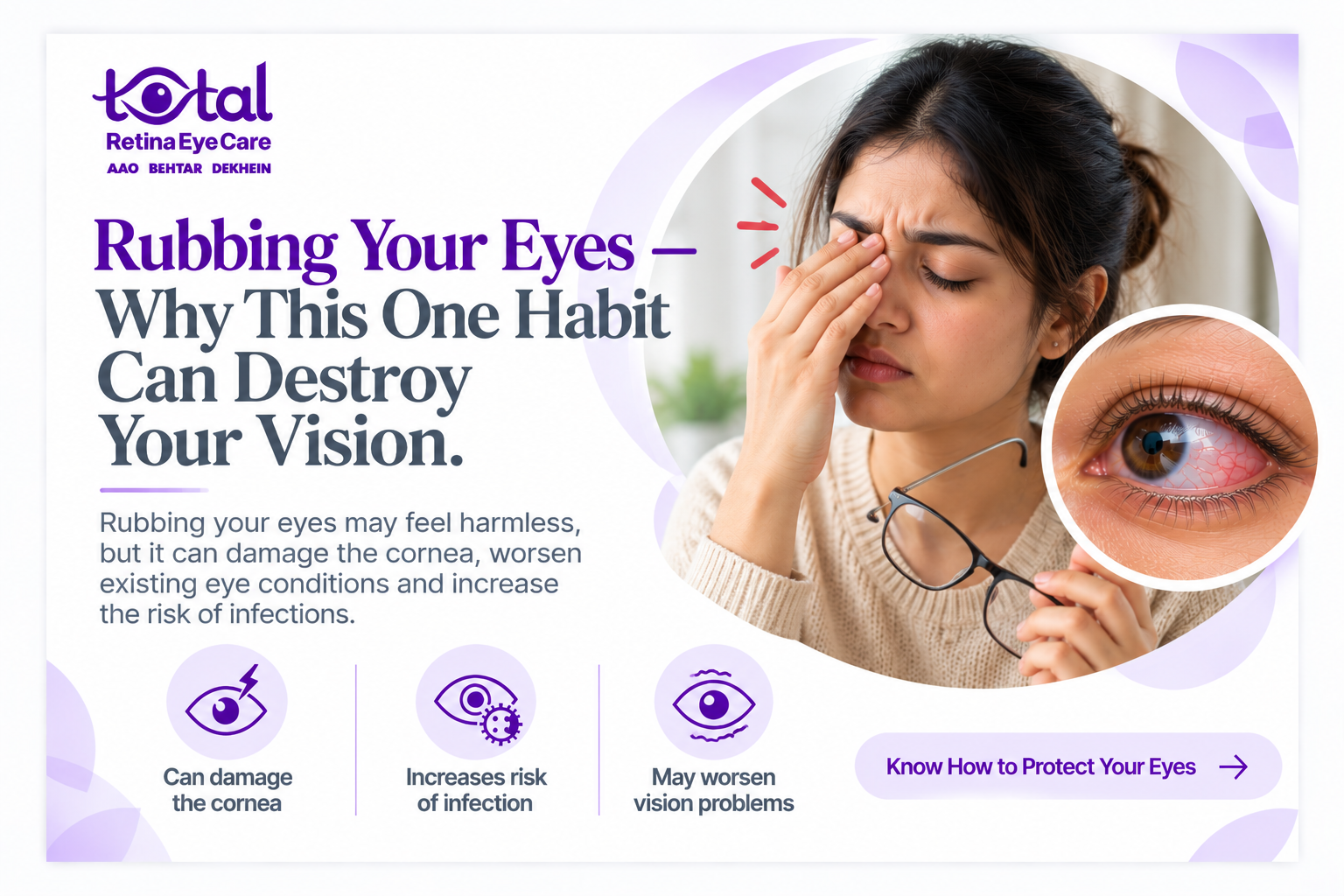
Quick AnswerAn occasional gentle rub is usually harmless. The real concern is habitual, forceful rubbing over months or years. It has been linked to thinning and bulging of the cornea (keratoconus), surface scratches, and irritation that keeps the itch going. If your eyes itch so often that you rub them every day, the better step is to find out why. An eye specialist in Nagpur can examine your eyes and identify the cause before the habit does any lasting damage.
Almost everyone rubs their eyes. It feels good in the moment, and that is exactly the problem. The relief is real but short-lived, and the habit that follows can quietly cause more trouble than the itch it was meant to settle. Most people only learn this when a doctor at an eye clinic in Nagpur tells them to stop, often after an eye test shows the cornea has started to change.
Is Rubbing Your Eyes Really Bad for You?It depends on how often, how hard, and whose eyes they are. A quick, gentle rub when you are sleepy does very little. The trouble starts with people who rub hard, for a long time, every day, often with their knuckles.
The cornea is the clear front window of the eye. It is thin and keeps its shape because of its internal structure. Repeated pressure over years can weaken that structure in people who are susceptible, and the cornea can slowly thin and bulge forward. This condition is called keratoconus. Rubbing does not cause it in everyone, and it is not the only cause, but it is one of the better-recognized risk factors.
Why Do We Rub Our Eyes in the First Place?Rubbing is a response, so the useful question is what is triggering the itch. The usual reasons are:
Allergies: the most common cause, especially in children and young adultsDry eyes: a poor tear film leaves the surface irritated (see our blog on dry eye for more)Tiredness and strain: after long hours of reading or screen workEyelid inflammation: the lid margins become swollen or blockedDust, smoke and pollution: something many people in cities deal with dailyHabit: the rubbing continues even after the original trigger has goneWhat Can Heavy Eye Rubbing Actually Do?Keratoconus risk: repeated mechanical stress on the cornea is associated with progressive thinning and a cone-like shape. This causes blurred and distorted vision that glasses may not fully correct.Surface damage: fingernails and dirty hands can scratch the cornea (a corneal abrasion), which is painful and can become infected.Spreading infection: hands carry bacteria and viruses, and rubbing moves them straight onto the eye.A cycle of irritation: rubbing releases more of the substances that cause itching, so the eye itches again soon after.Pressure on the eye: rubbing can briefly raise eye pressure, which matters for people who already have glaucoma.Who Needs to Be Extra Careful?Some people should take this more seriously than others:
Children and teenagers with allergic eye problems, who often rub intenselyAnyone with a family history of keratoconusPeople with high myopia or significant astigmatismPeople with known glaucomaAnyone who has had eye surgery, including cataract surgery or laser vision correction, because rubbing during healing can cause problemsA Note for Anyone Considering LASIK or SMILEIf you rub your eyes heavily and are thinking about laser vision correction, tell your surgeon. A long rubbing habit can go along with early, subtle corneal changes that only show up on corneal mapping. These changes can affect whether laser surgery is safe for you, which is one reason a proper corneal scan is part of the evaluation. Choosing the best eye hospital Nagpur has to offer for this assessment means looking for a centre with advanced corneal imaging and an experienced cornea and refractive team.
What to Do Instead of RubbingPlace a cold compress or a clean, cool, damp cloth over closed eyes for a few minutes.Use preservative-free lubricating drops if dryness is part of the problem.Wash your hands and face, and remove dust or pollen from around the eyes.Treat the cause: allergy eye drops, lid hygiene or dry eye treatment, as advised by your doctor.Keep your nails short, and try to catch yourself when you start rubbing without thinking.Avoid using leftover steroid drops from an old prescription for itching. Steroid drops can raise eye pressure when used without supervision and should only be used under a doctor's guidance.When Should You Get Your Eyes Checked?If you rub your eyes most days, or your child does, it is worth visiting an eye specialist in Nagpur for an examination even if vision seems fine. Keratoconus often begins without obvious symptoms, and it is easier to manage when it is found early.
Get checked sooner if you notice:
Frequent changes in your glasses powerBlurred or doubled vision that does not clear with new glassesIncreasing sensitivity to lightA visit to a trusted eye clinic in Nagpur can catch these changes early, often with a simple corneal scan.
Frequently Asked QuestionsDoes rubbing my eyes cause keratoconus?
It is a recognised risk factor, but not the only one. Genetics and allergic eye disease also play a role. Not everyone who rubs develops keratoconus, which is why it is hard to predict who will be affected.Is it okay to rub my eyes once in a while?
Yes. A gentle, occasional rub is not usually a problem. It is the heavy, repeated, long-term habit that matters.Why do my child's eyes itch so much?
Allergic conjunctivitis is a common reason, and it can be quite troublesome in some children. It is worth having your child examined and treated properly rather than managing it with repeated rubbing and over-the-counter drops.Can rubbing cause dark circles or puffiness?
Repeated rubbing can irritate the delicate skin around the eyes, but dark circles have several other causes, so rubbing is rarely the only explanation.Can keratoconus be treated?
Yes. Options range from glasses or special contact lenses in the earlier stages to corneal cross-linking, which aims to strengthen the cornea and slow progression. The right choice depends on how advanced it is.Can I rub my eyes after cataract or LASIK surgery?
No. Rubbing during the healing period can disturb the eye and should be avoided until your surgeon says it is safe.Visit UsIf you or your child rubs the eyes often, don't wait for symptoms to get worse. A thorough check-up with an experienced eye specialist in Nagpur can find the cause of the itch and protect your cornea. Whether you need an allergy review, a dry eye assessment, or a corneal scan, our eye clinic in Nagpur offers complete care under one roof, and patients regularly look to us as one of the best eye hospitals in Nagpur for cornea and refractive evaluations.
📍 Mehadia Bhawan, Lokmat Square, Dhantoli, Nagpur, Maharashtra 440012
📞 074209 55541
🌐 www.totalretinaeyecare.in