
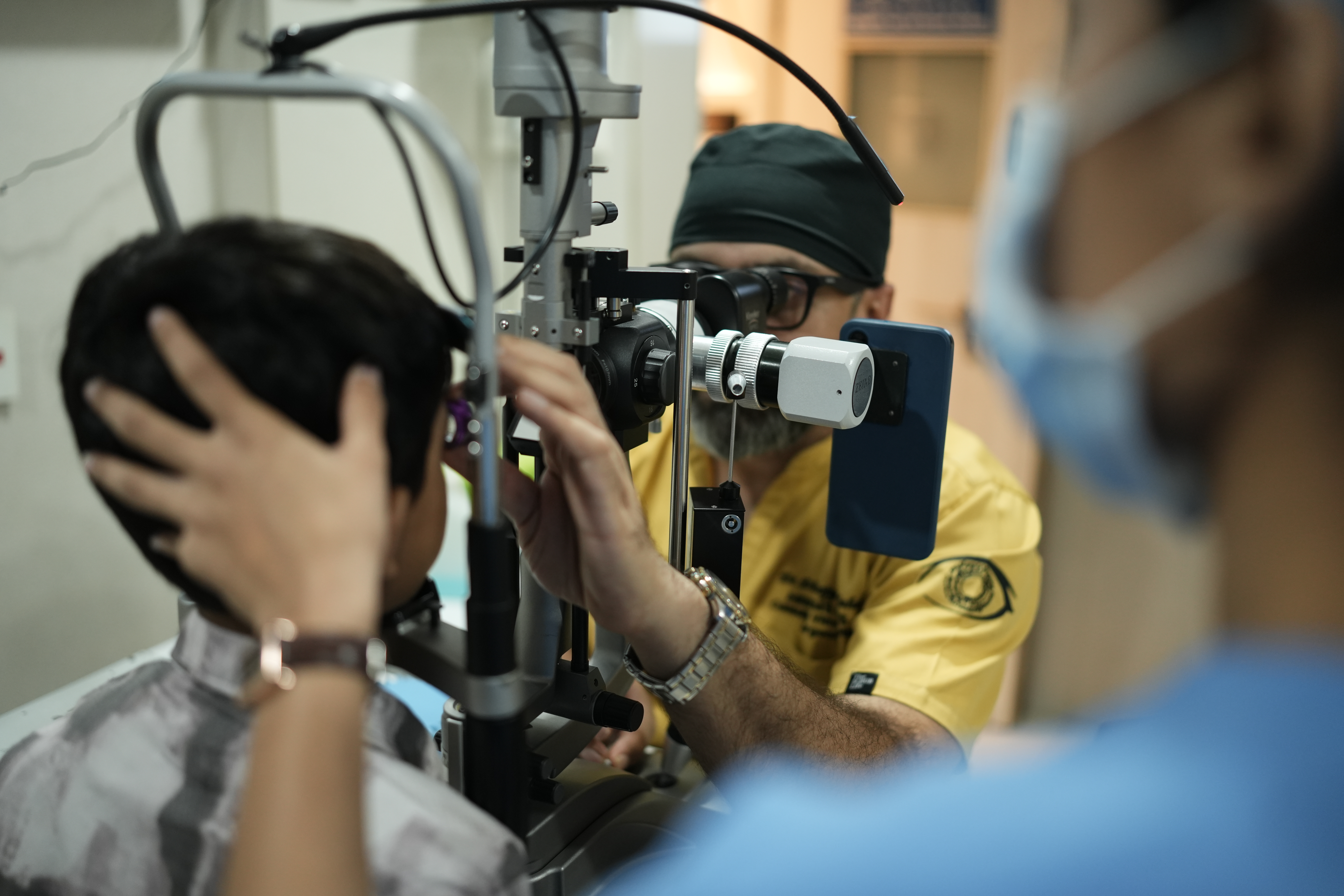
Most people take their eyes for granted until something goes wrong. The problem with many serious eye conditions is that they develop silently, without pain, without obvious symptoms, until significant and sometimes permanent damage has already occurred. As a retina specialist practicing in Nagpur for over 15 years, I have seen too many patients who came to us late not because they were careless, but because they simply did not know what to watch out for. This blog is my attempt to change that. Here are 10 warning signs that should prompt you to visit an eye specialist in Nagpur or wherever you are without delay.
1. Sudden Blurring of Vision
If your vision suddenly becomes blurry not gradually over months, but suddenly over hours or days it is a red flag. This can indicate retinal detachment, a sudden bleed inside the eye, or a stroke affecting the visual pathway. Do not wait. Visit an eye specialist in Nagpur the same day.
2. Flashes of Light (Photopsia)
Seeing sudden flashes of light like lightning streaks or camera flashes especially in dim surroundings, is often an early warning sign of retinal traction. Your retina may be pulling away from the back of your eye. This is a pre-detachment sign and needs urgent evaluation.
3. A Sudden Increase in Floaters
Almost everyone has a few floaters those tiny specks or threads drifting across your vision. But if you suddenly notice a shower of new floaters, particularly alongside flashes of light, it can indicate a retinal tear or bleed. Do not dismiss this as normal ageing.
4. A Dark Curtain or Shadow Over Part of Your Vision
This is one of the most serious signs a dark shadow or curtain coming across your field of vision, often from one side. This typically signals a retinal detachment. Retinal detachment is a medical emergency. Every hour matters. Immediate surgery can save your sight; delay cannot be reversed.
5. Distorted or Wavy Central Vision
If straight lines appear wavy or bent when you look at them like a door frame appearing curved this points toward a macular problem, most commonly macular degeneration or a macular hole. This affects your central vision, the most critical part for reading, driving, and recognizing faces.
6. Gradual Loss of Side (Peripheral) Vision
Slowly losing vision at the edges of your visual field, while your central vision appears normal, is a classic sign of glaucoma. Glaucoma is called the silent thief of sight for a reason — by the time you notice peripheral loss, significant optic nerve damage has already occurred. Regular eye check-ups are the only reliable way to detect it early.
7. Eye Pain with Redness and Sensitivity to Light
A red eye with pain and sensitivity to light is not always just conjunctivitis. It could indicate uveitis (inflammation inside the eye), acute angle-closure glaucoma, or a corneal problem. All of these require prompt medical attention and specific treatment. Self-medication with over-the-counter eye drops often delays proper diagnosis.
Seeing double - either in one eye or both - can have causes ranging from a muscle problem around the eye to neurological conditions. Sudden onset double vision, especially if accompanied by headaches or drooping eyelid, needs immediate evaluation by both an eye specialist and a physician.
If you have diabetes and notice blurring - even mild, even occasionally - do not attribute it simply to fluctuating blood sugar. Diabetic retinopathy can cause swelling of the retina (macular oedema) that blurs vision long before it becomes obvious. Every diabetic patient should get a dilated retina check-up at least once a year, regardless of symptoms.
10. Difficulty Seeing in Low Light or at Night
Struggling to adapt when moving from bright light to a dark room, or difficulty driving at night, can indicate early cataract, vitamin A deficiency, or retinal disease. Night blindness is not just an inconvenience — it is a symptom worth investigating.
When Should You Visit an Eye Specialist in Nagpur?
The honest answer is do not wait for symptoms. Many serious eye conditions including glaucoma, diabetic retinopathy, and early retinal disease have no symptoms in their initial stages. The only way to detect them is through a proper dilated eye examination.
However, if you experience any of the 10 signs listed above, treat it as urgent. Do not wait for your next scheduled appointment. Come in the same day or the next morning.
Who is at higher risk and must get regular eye check-ups?
Diabetics (every 6 months) | Hypertensive patients (once a year) | Anyone above age 40 (once a year) | those with a family history glaucoma | High myopia (spectacle power above minus -6) | Anyone post eye surgery or eye injury
Frequently Asked Questions
Q1. Can I problem develop without any pain?
Yes - and this is the most dangerous aspect of many serious eye conditions Glaucoma diabetic retinopathy, retinal detachment in early stages, and macular degeneration can all cause significant damage without any pain. Pain is not a reliable indicator of eye health.
Q2. Are floaters always serious?
Not always most people have occasional floaters that are harmless. However, a sudden increase in floaters, especially with flashes of light or a shadow in vision, is a warning sign of retinal traction or tear and must be evaluated urgently.
Q3. My vision blurred suddenly can I wait a day or two?
No. Sudden vision blur is an eye emergency until proven otherwise. Conditions like retinal detachment, retinal vein occlusion, or sudden bleed in the eye require same-day treatment for the best outcome. Delay directly worsens the prognosis.
Q4. I am diabetic but my vision seems fine. Do I still need a retina check?
Absolutely yes. Diabetic retinopathy in its early stages causes no symptoms. By the time vision blurs, the disease is usually moderate to advanced. Every diabetic must get a dilated fundus examination at least once a year, even with perfect vision.
Q5. Where can I get a complete eye check-up in Nagpur?
You can visit Total Retina Eye Care at Shanti Prabha Nursing Home, Mehadia Bhawan, Lokmat Square, Dhantoli, Nagpur. We offer computerized eye testing, retina OCT scan, glaucoma assessment, and consultation with specialist doctors. Call 7420955541 to book your appointment.
Final Words from Dr. Dhrubbojyoti Saaha
Your eyes are irreplaceable. Unlike many organs, the eye has very limited capacity to heal itself once vision is lost due to retinal damage or advanced glaucoma, it often cannot be fully restored. The good news is that most serious conditions, when caught early, are very treatable.
Make a habit of an annual eye check-up, just as you would for blood pressure or blood sugar. And if you notice any of the 10 warning signs mentioned above do not hesitate. Come in immediately.
Book your eye check-up today
Total Retina Eye Care - Shanti Prabha Nursing Home
Mehadia Bhawan, Lokmat Square, Dhantoli, Nagpur
Call 7420955541
www.totalretinaeyecare.in
totalretinaeyecare@gmail.com